
Scoliosis – More Than Just a Curve in the Spine
- September 4, 2026
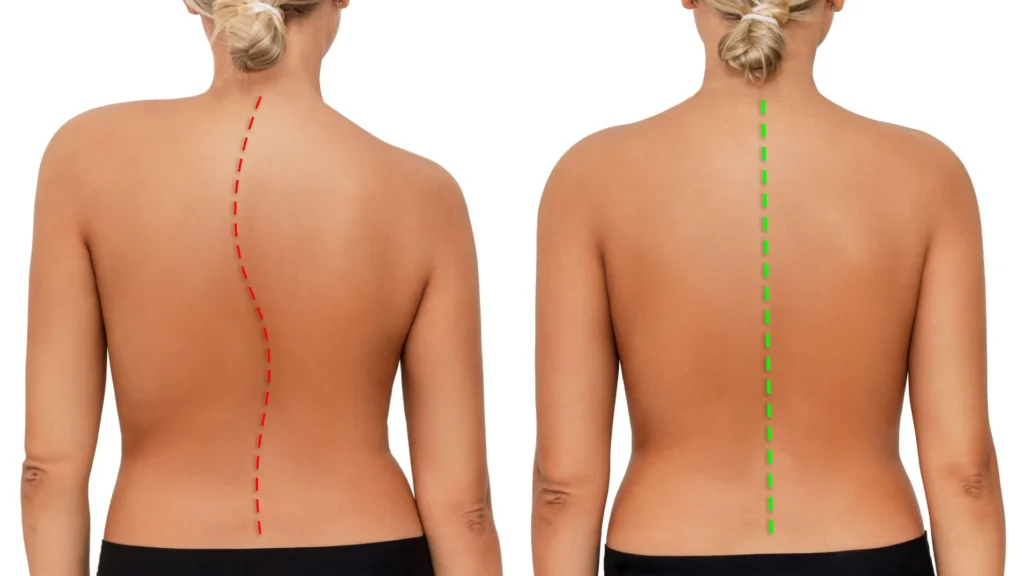
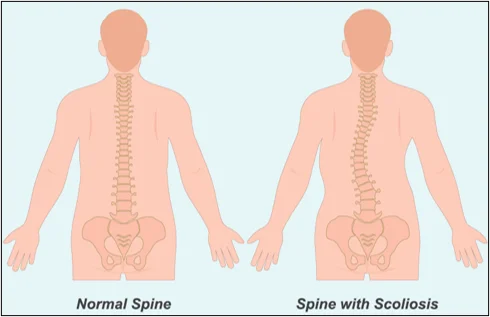
Scoliosis is the medical term for a spine that curves to the side and twists into a ‘C’ or ‘S’ shape. In reality, nobody’s spine is perfectly symmetrical and most of us will have some degree of minor lateral curvature. A spinal curve is generally classified as a scoliosis when it measures 10° or more on x-ray. Scoliosis can vary considerably from person to person as some people experience few or no problems, while others develop more noticeable changes to their posture and may experience pain, stiffness or difficulty with certain activities.
Scoliosis varies not only in severity, but also in its underlying cause. Broadly, we can divide scoliosis into structural and functional forms.
Different types of scoliosis A structural scoliosis involves a fixed change in the shape and rotation of the spine. One of the most recognised forms is Adolescent Idiopathic Scoliosis, which develops in children and teenagers, often becoming apparent during periods of rapid growth. The term “idiopathic” means that there is no single identifiable cause.
Adults can also have structural scoliosis. This may be a curve that developed during adolescence and remains into adulthood, or it may develop later in life as degenerative changes affect the discs and joints of the spine or following injuries such as vertebral fractures.
A functional scoliosis occurs when the spine curves in response to other factors affecting the way someone stands or moves and is not a fixed structural change to the spine itself. Factors such as differences in leg length, pelvic position or adaptations associated with pain can sometimes contribute to this type of curvature.
Functional asymmetries can also develop or become more pronounced in response to habitual postures or repetitive activities, particularly where the body is repeatedly loaded more on one side than the other.
Why can scoliosis cause symptoms?
Having scoliosis does not necessarily mean that you will have back pain. Some people with quite noticeable curves experience relatively few symptoms, while others with smaller curves may suffer more.
Altered posture in the spine alters the way forces are distributed through the joints, muscles and surrounding tissues. Parts of the spine and ribcage may become stiff, while other areas compensate by moving more. The muscles may also have to work differently to maintain an upright posture. This can lead to back or neck pain, muscular fatigue, aching and stiffness. Visible changes can include uneven shoulders or hips, a more prominent shoulder blade, or asymmetry through the ribcage.
How can osteopathy help?
When we assess somebody with scoliosis, our focus isn’t simply on the appearance of their spinal curve. We look at how that individual’s body is functioning as a whole.
This includes assessing movement through the spine and ribcage, the hips and pelvis, muscular tension, strength and the way different areas of the body are compensating for one another.
Osteopathic treatment does not aim to straighten a structural scoliosis. Instead, where appropriate, techniques such as joint mobilisation and soft-tissue treatment may be used as part of an individual management plan, with the aim of improving movement and helping to manage associated musculoskeletal symptoms. Treatment is therefore tailored to the individual rather than simply to the shape of their spine.
The importance of exercise
Exercise and maintaining physical activity can also form an important part of managing the physical symptoms associated with scoliosis. We prescribe exercises aimed at improving mobility and strength to reduce pain and improve function. Exercise programmes should be individualised and prescribed according to the person’s particular movement patterns and needs.
When is further treatment needed?
Depending upon the type and severity of scoliosis, specialist referral may be required for further investigation and treatment. This is particularly important when scoliosis is identified in a child or adolescent, as the curve may change during growth and may require specialist monitoring. Investigation may include X-rays and, where clinically indicated, MRI scans. In growing adolescents a brace may be recommended. In some people with severe or progressive structural scoliosis, surgical treatment may be considered.
For most people, the important starting point is understanding their individual scoliosis, how it affects their movement and daily life, and determining the most appropriate approach to managing it.
If you have scoliosis, or have noticed changes in your posture, an osteopathic assessment can help identify how these may be affecting your movement and function. We can then advise whether osteopathic treatment, individualised exercise or further specialist assessment may be appropriate.