
Autumn and Winter Footcare Tips
- November 5, 2025
As with most of the problems we deal with at The Courtyard Clinic, there is a seasonal nature to the foot health issues that our resident Podiatrist treats at this time of year.
Autumn brings cooler temperatures and a transition to closed-toe shoes. Research conducted by the College of Podiatry reveals that 70% of people in the UK suffer from foot problems related to wet and slippery conditions during the autumn season. The National Institute for Health and Care Excellence (NICE) reports a 25% increase in ankle sprains and twisted ankles during the autumn months in the UK. As Autumn turns to Winter our feet face further challenges. Cold temperatures, dry air, and closed-toe shoes can take a toll on foot health. According to the National Health Service (NHS), there is a 30% increase in cases of frostbite and other cold-related foot problems during the winter season in the UK. The Royal Society for the Prevention of Accidents (RoSPA) states that slip and trip accidents due to icy conditions account for 30% of all accidents in the UK during the winter months.
Here are some foot care tips for the darker months.
1) Trim your toenails regularly to prevent ingrown nails and fungal nail infections. To correctly cut your toenails, you should:
- Cut straight across: Avoid rounding the edges or cutting into a V-shape. This helps prevent ingrown toenails.
- Leave some length: Make sure the corners of your toenails are long enough to loosely rest against the skin. You should be able to see 1-2 mm of the white end of your nail.
- Use small cuts: If your toenails are thick, make small, straight cuts to prevent splintering.
- Clean your tools: Wash your nail clippers or scissors with soap and water, then disinfect with rubbing alcohol. Store them in a clean, dry place.
- Trim regularly: Toenails grow about 2mm per month, so aim to trim them every 6–8 weeks. If you’re very active, you might want to trim them more often.
- File rough edges: This prevents sharp corners irritating the skin
- Clean your toes regularly to help prevent conditions such as athletes foot and fungal nails.
2) Stay active and avoiding prolonged periods of sitting or standing still: In the cold weather our body keeps blood in the core to preserve body heat, this means that the feet get less circulation which can effect many aspects of foot health. By exercising the feet our body will send more blood to the area to supply the muscles and nerves with the nutrients they need.
3) Keep your feet warm and dry by wearing insulated and moisture-wicking socks: Damp feet can cause blisters and painful cracked heels. It can also lead to infections like athletes foot and fungal nails.
4) Moisturise your feet: Regularly moisturising can prevent dry, cracked skin. The massaging effect of moisturising also stimulates circulation which in turn helps to prevent infection.
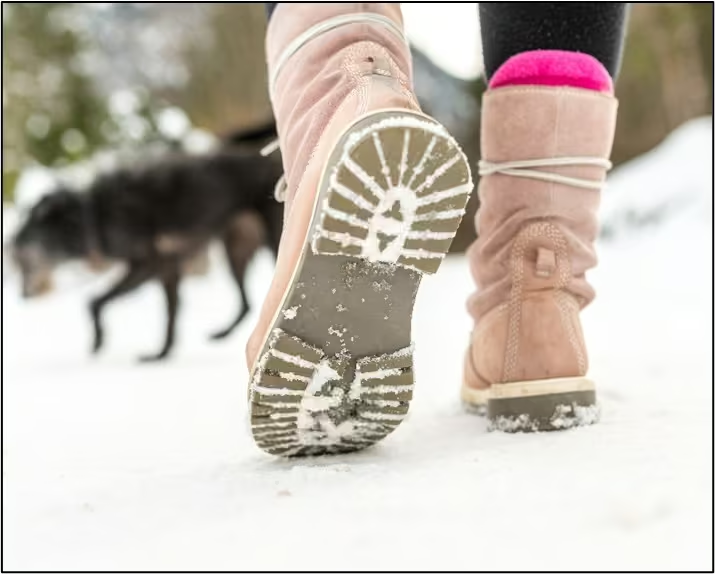
5) Choose proper footwear that provides insulation, support, and traction: Good quality footwear will keep your feet warm and dry, and help you to stay upright on muddy/wet/icy surfaces!
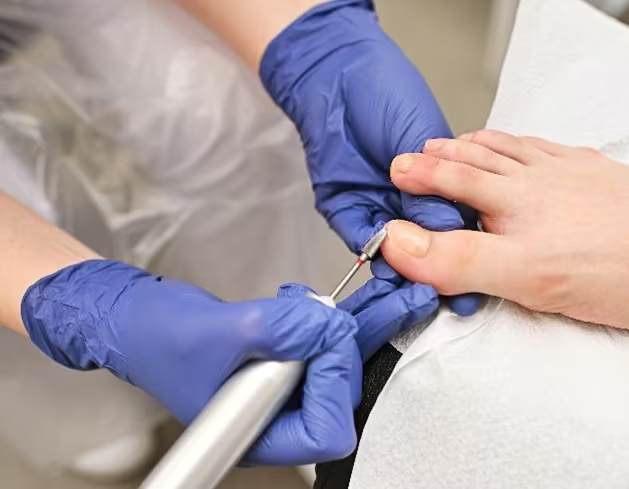
If you suffer regularly with any foot issues, it is worth seeing a qualified podiatrist. Fortunately, we have a very good one on our team who can help with many different aspects of foot health including:
- Damaged and fungal nails,
- Hard skin, corns and calluses,
- Cracked heels,
- Verrucae,
- Diabetic Health Checks.